These records are found in the online catalog of The Mariners’ Museum and Park in Newport News, Virginia. Uncurated search results are presented to give researchers and interested readers an idea of whether the museum’s archives contain information about this vessel and whether it may be worthwhile to visit the museum’s catalog search page for further investigation. Uncurated results may be inaccurate or incomplete.
Mariners Museum online catalog search, July 12, 2026. Search phrase: "Myrtle". Catalog returned 40 records; this selection table includes 40 records fetched through catalog result pages.
Use these buttons to send uncurated search results to your own app or text document for further research. First, check the box for any row, or click "Select All" then uncheck any rows. Then click "Show Selections". You can then copy your selections from the text box and past them into your app.
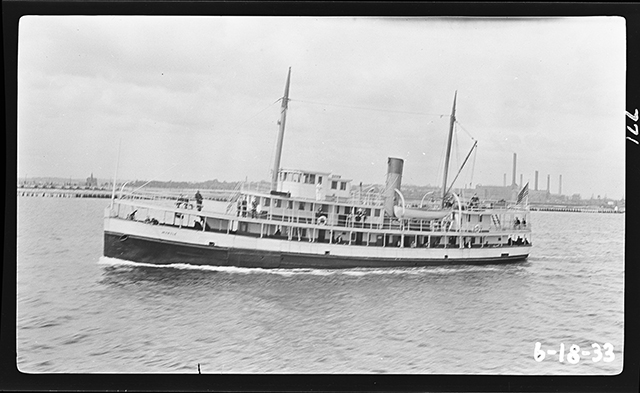
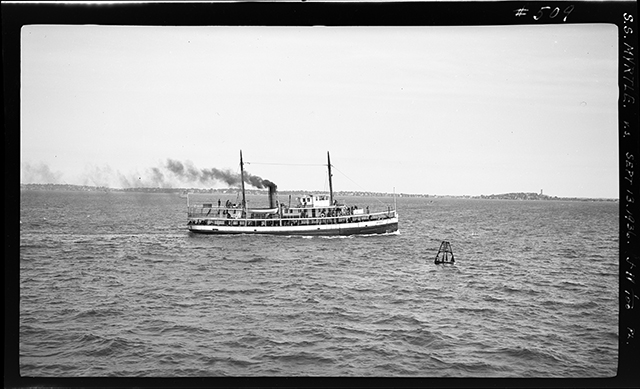
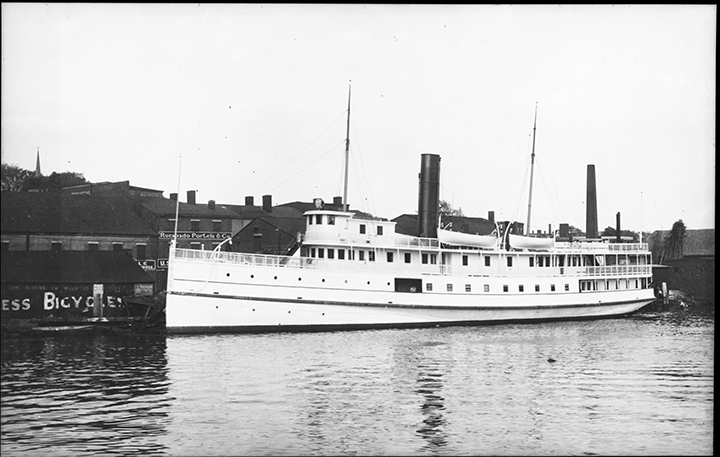
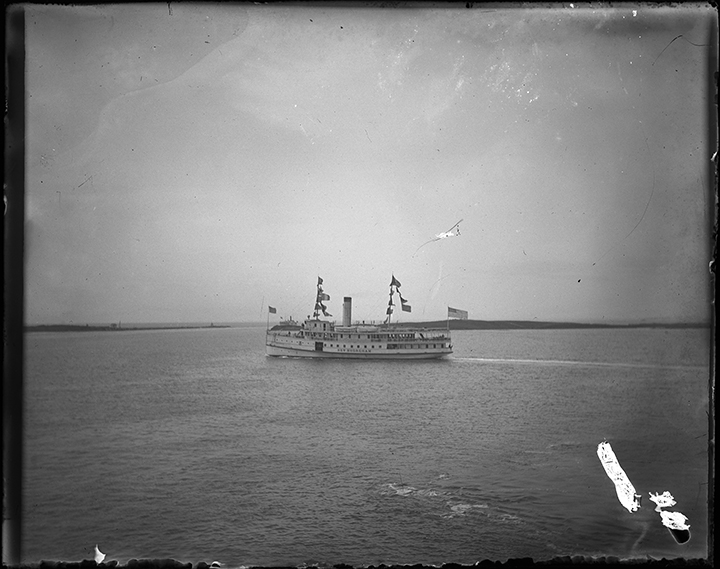
#509 S.S. Myrtle. U.S. Sept 13, 1936. f 11 1/100 PL.
Ships.; Travelers.; Bodies of water.
Broadside view of the Myrtle in midstream. There are people on board. There is a buoy in the water near the bow of the ship. The shoreline is visible in the background.
Steamboats–United States.; Government vessels–United States.
Shows a port side view of the stern of a lighthouse tender, her flags and ensigns flying. Stanton's notebooks contain the following information about this item: "Apl 27 1897"
Steamboats–United States.; Government vessels–United States.
Shows a view looking through the masts and rigging of a sailboat towards the starboard side of the bow of a lighthouse tender moored at a pier. Stanton's notebooks contain the following information about this item: "Apl 21, 1895"
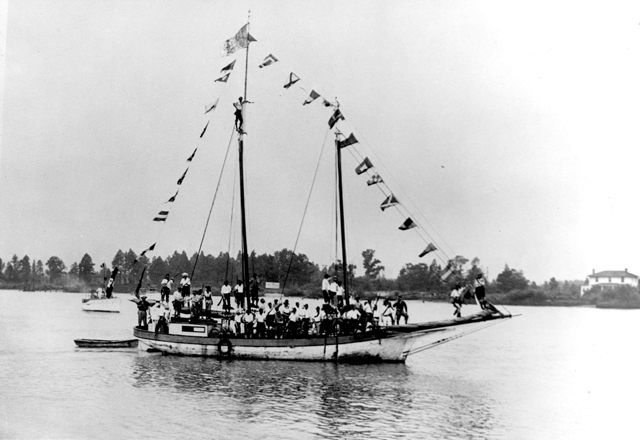
Shows a distant port side view of a skipjack moored in a harbor. The handwriting on the caption is difficult but this is the sloop Myrtle and not Nyrth. There is no caption for this negative.
Envelope: "Bugeye. R.H. Dougherty repairing at White Haven, MD"
Boats and boating–Maintenance and repair.
This is the Myrtle, also shown in file 379.2 item 0379-C. The R.H. Dougharty shown in file 607 item 0607 is clearly a much larger boat. Both items named above date to 1941. Possibly Brewington is in error by conflating the two. There is no caption for this negative.
NOTES: This is an image cut from July 1903 Burr McIntosh Monthly, a monthly magazine started by photographer Burr McIntosh which lasted from 1903–1910. It consisted mainly of photographs of famous people and landscapes, and was bound by string so as to encourage framing of the photographs. Myrtle McGrain (1883 – 1980) was and American actress.
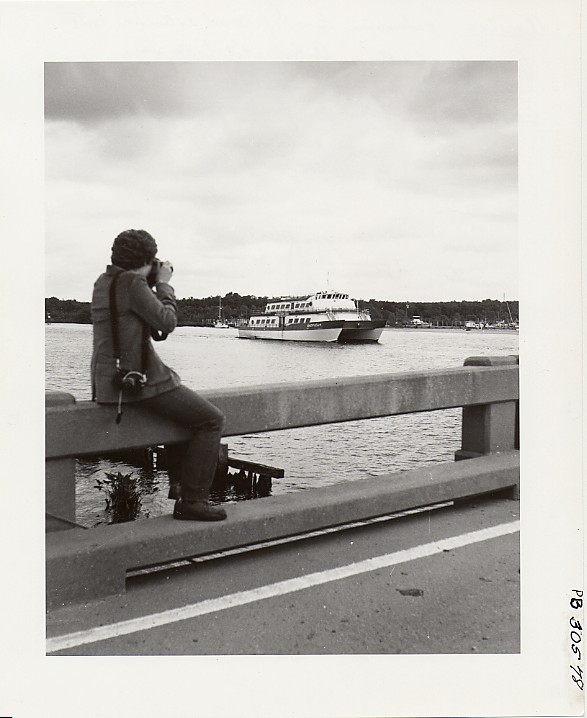
CURATOR NOTES: Vessel is proceeding south via Intercostal Waterway-passing Pungo Ferry Bridge-North Landing River en route from Washington, D.C. for Myrtle Beach, SC. Woman on bridge sitting on cement railing photographing approaching ferry.
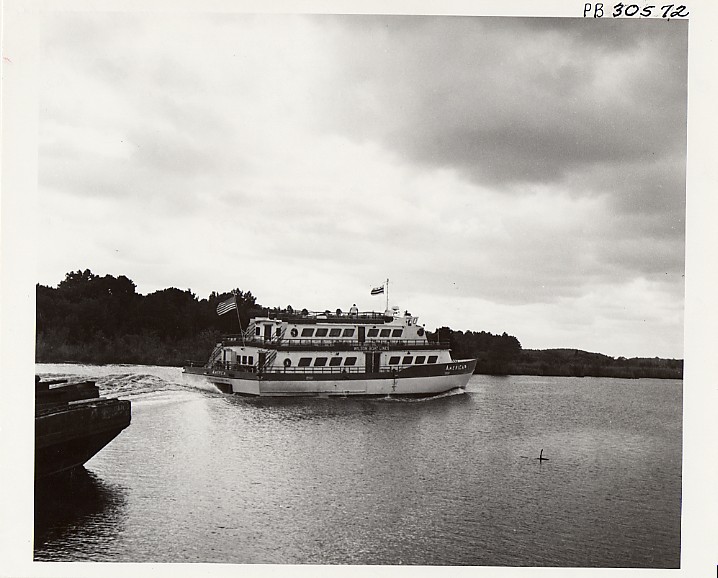
CURATOR NOTES: Vessel is proceeding south via Intercostal Waterway-passing Pungo Ferry bridge-North Landing River en route from Washington, D.C. for Myrtle Beach, SC PUBLICATION RIGHTS: G- A.C. Brown
Defrauding the government : - true tales of smuggling, from the note-book of a confidential agent of the United States Treasury - by William H. Theobald
L7877 - Nurses of Kecoughtan General Hospital at AP prior to embarkation. 5-17-44 Official Photograph, U. S. Army Signal Corps, HRPE, Newport News, Va.
Shipping–History–19th century. United States; Merchant ships–History. United States
This collection of twenty-one original pieces reflects various types of documentation generated in connection with maritime activity on the Atlantic in the years between 1827 and 1875: abstract logs, dimensions, receipts, articles of agreement, letters, bills, and expense accounts. While primarily composed of material directly related to nineteenth century merchant vessels, the collection does feature a letter written by the Chief Engineer of the USS Wabash, which was active in the Civil War, as well as a check, an insurance policy, a bill, a memorandum for goods sold, and an account sheet.
L7876 - Group of nurses at Camp Patrick Henry about to embark for overseas. These nurses were formerly stationed at CPH Station Hospital and Kecoughtan General Hospital. 5-17-44 Official Photograph, U. S. Army Signal Corps, HRPE, Newport News, Va.
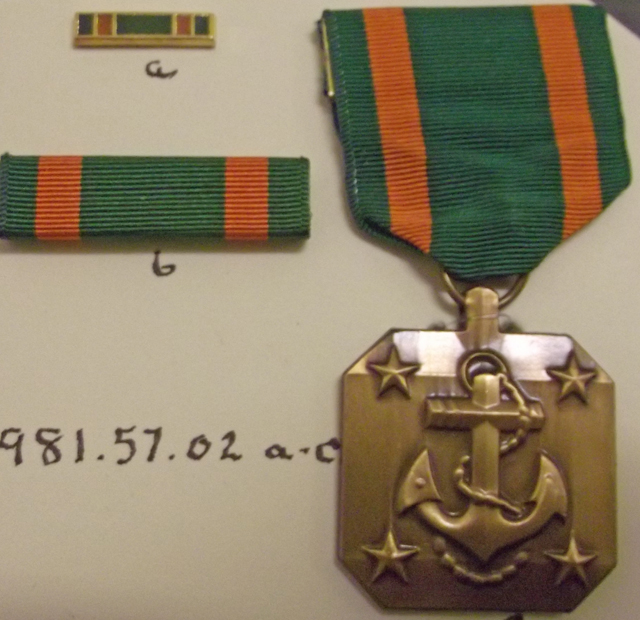
SHORT DESCRIPTION: A fouled anchor is displayed in the center of a rectangular bronze medallion one and a quarter inches wide (with clipped corners). There is a five-pointed star (point up) in each corner of the medal. This design was suggested by the flag of the Secretary of the Navy, under whose authority it was established. The reverse of the Navy and Marine Corps Achievement Medal is blank for engraving the recipient's name. The ribbon is myrtle green with a stripe of Indian orange inside each edge. NOTES: The Navy and Marine Corps Achievement Medal was originally established as the Secretary of the Navy Commendation for Achievement with Ribbon by Secretary of the Navy John B. Connally's SECNAVINST 1650.12 of May 1, 1961. In 1962 the name was shortened to the Secretary of the Navy Commendation for Achievement. In 1964 it was converted to a medal and its name was changed to the Secretary of the Navy Commendation for Achievement Medal, and on July 17, 1967 the Secretary of the Navy changed its name to the Navy Achievement Medal. The final name change took place via ALNAV 084/94 when Secretary of the Navy John H. Dalton changed the name to The Navy and Marine Corps Achievement Medal. The Navy and Marine Corps Achievement Medal may be awarded to members of the Armed Forces in the grades of lieutenant commander (or major) and below. It is awarded for meritorious service or achievement in either combat or noncombat based on sustained performance or specific achievement of a superlative nature but which does not warrant a Navy Commendation Medal or higher. It may not be awarded for service involving participation in aerial flight after January 1, 1969. The Navy and Marine Corps Achievement Medal was designed by Arnold P. Simmons and sculpted by Lewis J. King, Jr., both of the Army's Institute of Heraldry. INVENTORY: ribbon, pin and case - there are three (3) component parts.
WRITTEN ON VERSO: J. W. LATHROP (MOTOR VESSEL) WILMINGTON, NORTH CAROLINA. BUILT 1909 AT SOUTHPORT, NORTH CAROLINA, BY CAPTAIN TUCK FULCHER. OWNED BY GEORGE E. BROOKS. 14 TONS. 49 X 14 X 3.5. FOUNDERED 8 MILES FROM MYRTLE BEACH, SOUTH CAROLINA, MAY 12, 1942.
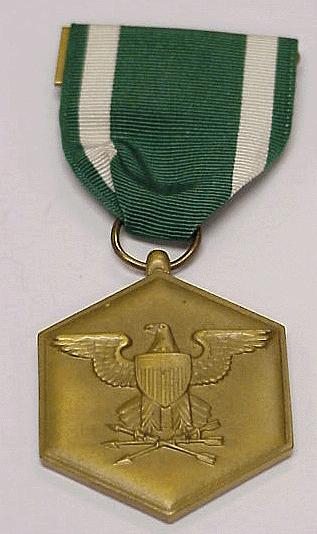
SHORT DESCRIPTION: Display copy of the Naval Commendation medal. The obverse has in the center of a bronze hexagon one and three-eighths inches wide, there is an eagle with horizontally displayed wings bearing on its breast a shield. In its talons the eagle holds three arrows. The shape of the medal was designed to distinguish the Commendation Medal from all other decorations. The eagle is from the Seal of the Department of Defense, and the shield on the eagle's breast is taken from the Great Seal of the United States. The reverse has in the center of the bronze hexagon a plaque for engraving the recipient's name. Above the plaque, in two lines, the inscription in raised letters, FOR MILITARY, and below the plaque, MERIT. Below the word MERIT, and in the bottom point of the medal, there is a spray of laurel, representing achievement. The ribbon to the Navy and Marine Corps Commendation Medal consists of a field of Myrtle Green with a white stripe one quarter inch wide situated one-eighth of an inch inside each edge of the ribbon. NOTES: The Navy and Marine Corps Commendation Medal was designed and sculpted by Thomas Hudson Jones (1892-1969) of the Army's Institute of Heraldry. The medal was originally designed as the Army Commendation Medal, but its design was subsequently adopted by the Navy. The Navy and Marine Corps Commendation Medal may be awarded to service members who, while serving in any capacity with the Navy or Marine Corps, distinguish themselves by heroism, outstanding achievement or meritorious service (but not of sufficient nature to warrant a higher decoration). To be awarded for heroism, the act must be worthy of special recognition but not the degree required for the Bronze Star Medal when combat is involved or the Navy and Marine Corps Medal when combat is not involved. To be awarded for meritorious achievement, the act or acts must be outstanding and worthy of special recognition, but not to the degree required for the Bronze Star Medal or Air Medal when combat is involved or the Meritorious Service Medal or Air Medal when combat is not involved. The achievement should be such as to constitute a definite contribution to the naval service, such as an invention or improvement in design, procedure or organization. To be awarded for meritorious service, the service must be outstanding and worthy of special recognition, but not to the degree required for the Bronze Star Medal or Air Medal when combat is involved or the Meritorious Service Medal or Air Medal when combat is not involved. the award may cover an extended period of time during which a higher award may have been recommended or received for specific act(s). The criteria, however, should not be the period of service involved, but rather the circumstances and conditions under which the service was performed. The performance should be well above that usually expected of an individual commensurate with the individual's grade or rate, and above that degree of excellence which can be appropriately reflected in the individual's fitness report or personnel records NOTES: This medal was originally part of a panel of 34 U.S. Navy and U.S. Marine Corps medals that were donated by the U.S. Navy Department.
H-9975 - The following are attached to the CPH Post Office, first row, left to riht, Capt. Cletus M. Wickens, 0-497772, Postal Officer, Rice Lake, Wisconsin; 2nd Lt. Mark J. Grady, 0-1004473, Ass't Postal Officer, 821 Ridge St., Newark, New Jersey; T/Sgt. Theodore G. Berman, 36363867, Chief Clerk, 109 N. East St., Janesville, Wisconsin and S/Sgt. Helen E. McGarvey, A-306460, 3rd WAC Co., CPH, Chief Directory Section. Second row, left to right, S/Sgt. Peter P. Reilly, 33351882, Ass't Chief Clerk of Parcel Post Section, 13 W. Green St., Nanticoke, Pa.; Sgt. Anthony C. Dondero, 31164795, Chief of Insured and Registered mail, 41 Upland Rd. Winthrop, Mass.; Sgt. Paul H. McDowell, 321012463, Chief of Outgoing mail, Linwood, New York, and Sgt. Leonard J. Pocker, 31158954, Chief of INcoming Letter Distribution, 9 Myrtle St., BEverly, Mass. 9-26-44 Official Photograph, U. S. Army Signal Corps, HRPE, Newport News, Va.
Postal service–Virginia–Newport News.
Post Office officer pose in two rows, standing and seated, fro a group portrait. They are in the Post Office Building at Camp Patrick Henry.
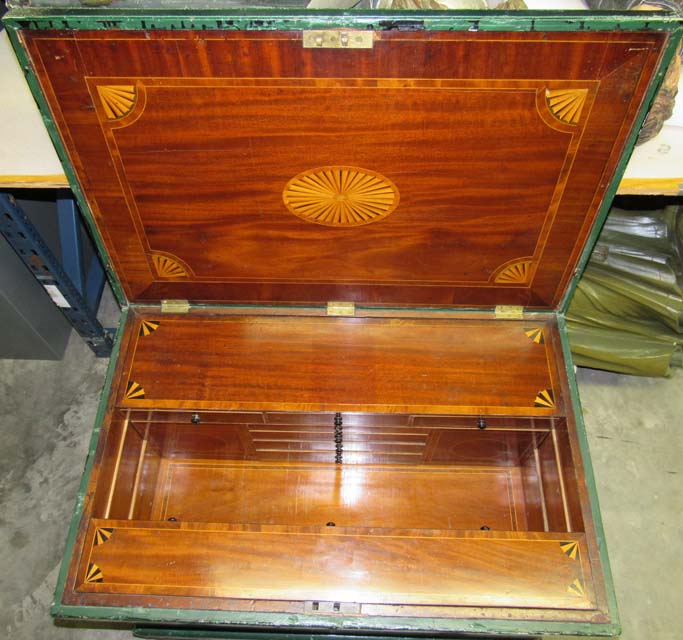
SHORT DESCRIPTION: Large pine seachest. Nondescript painted green exterior with decorative inlaid mahogany inlays in the interior. The inside contains a series of sliding drawers and compartments, a sword box, bullion compartments, and a false bottom. NOTES: Captains and seamen alike owned sea chests but the Captain's large sea chest was nicely fitted with drawers and compartments for his personal belongings. Although the outside of the chest was of necessity plain, the interior usually had fine inlay work. The seaman's smaller sea chest was made of rough pine with homemade decoration. The Captain's sea chest had a lock on it, but it was considered bad manners for a seaman to lock his sea chest. NOTES: According to the donor the chest was acquired from the estate of Countess Julie de Belleroche. The family of the Marquis de Belleroche was one of the oldest Houses of Europe and was connected to the Royal Family of France. The Belleroche (Huguenot) ancestors left France for Britain after the Revocation des Edit de Nantes in 1685. The countess, formerly, Julie Emilie Visseaux, married Albert Gustavus De Belleroche (1864-1944) in Paris in 1910. Albert was born in Swansea but spent most of his life in Paris. Belleroche and Julie moved to England and lived with his mother in St John's Wood, Westminster for a short time. In 1912, they moved to West Hampstead and six years later they moved to Rustington, Sussex. It was from this final home that the chest was acquired. Count William, the son of Julie and Albert, did know any of the history of the chest and could only say that it had lay sealed for many years in their English home. TIME SPACE: Late 18th century to early 19th century. ADDITIONAL INFORMATION: See object file for bibliographical references.
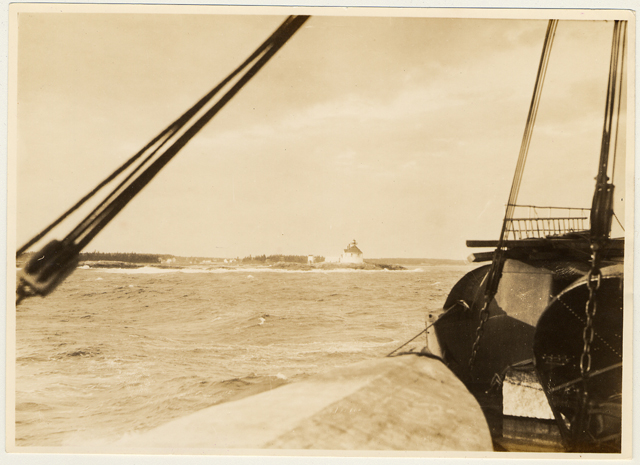
WRITTEN ON VERSO: CUCKOLDS LIGHTHOUSE, BOOTHBAY HARBOR, MAINE. BUILT 1892, REBUILT 1907, 48 FEET HIGH
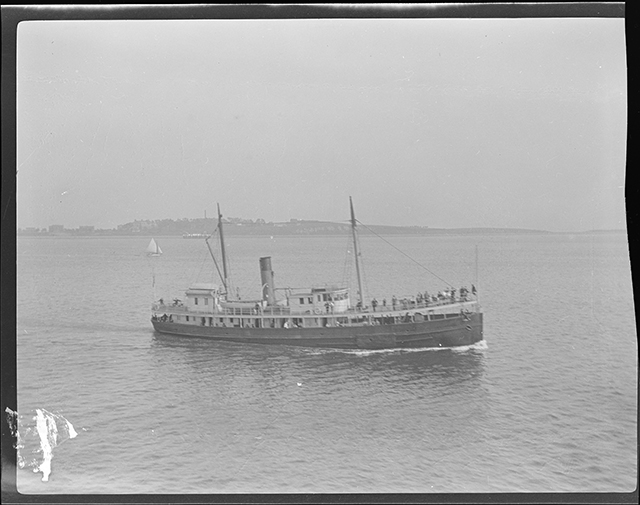
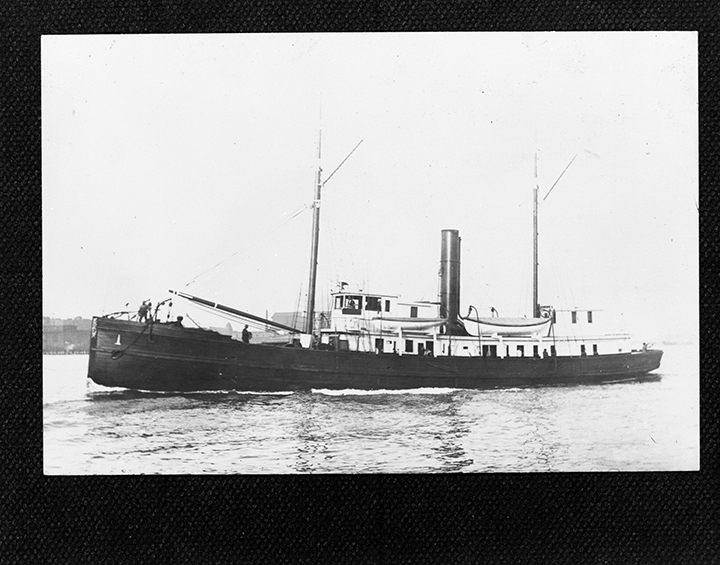
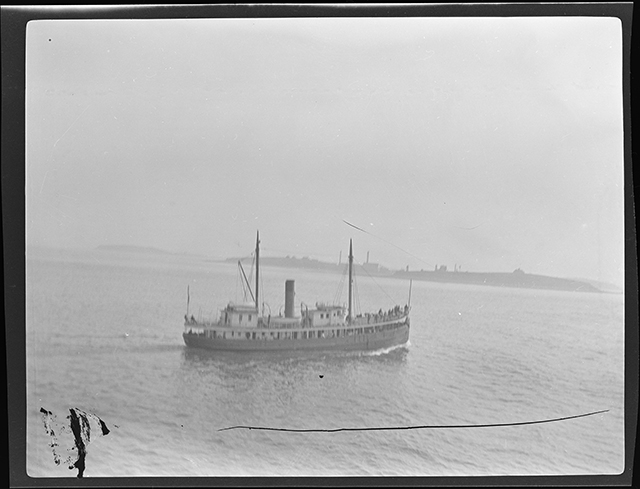
CURATOR NOTES: Lighthouse seen in distance. Perhaps the loveliest time to observe The Cuckolds is at sunset from a boat close by to the eastward. The white light against a glowing red and golden sky... the dark outline of the trees on Cape Newagen, and tired seagulls winging their way eastward . . . produce a scene and a sense never to be forgotten. Malcolm F. Willoughby, Boothbay Register, 1962. This oddly named lighthouse is one of the last to be built on the Maine coast. The name Cuckolds, given to a pair of treacherous ledges at the entrance to Boothbay Harbor, is apparently after a point of land on the Thames River in England that was granted to a London man to assuage his anger after King John had an affair with his wife. The Cuckolds in Maine may have been named by a transplanted Londoner. A tripod-type day beacon was located on the Cuckolds since1874. In 1890, a recommendation was made for a fog signal station, stating that the Cuckolds were "dangerous of approach on their southern side on account of the reefs in that direction, and the shoals which extend half a mile to the westward of the western rock. . . . They are much dreaded by mariners in thick weather." In 1891, a sum of $25.000 was appropriated for the building of a fog signal station. The lighthouse tender Myrtle brought 650 tons of materials to the Cuckolds, including 60,000 bricks. A steam-driven Daboll fog trumpet was established in November 1892, with an attached double dwelling. In 1902, a new oil-powered fog signal was installed. Wrecks continued in the vicinity in spite of the fog signal station. In January 1896, Cuckolds fog signal keepers Edward H. Pierce and Clarence Marr rescued six crewmen of the Canadian schooner Aurora on a bitterly cold night with the help of two lobstermen from Cape Newagen. The rescuers were awarded silver watches by the Canadian government. In January 1933, a storm swept the station and destroyed the belongings of Keeper Harold Seavey, who was reimbursed in full by the Department of Commerce. Another keeper's wife said she was sewing near a second-story window one August day when a "freak wave" poured through the window, damaging much of the furniture. Coast Guardsman Kelly Farrin lived with his wife at the Cuckolds for two years, 1969-1970. He shares many of his memories on his website. Here are some excerpts: The Cuckolds was about a mile or so offshore and was exposed to the open ocean. The waves washed on the shore relentlessly and were never silent. I measured the island with a tape measure and calculated it to be roughly 520 feet in circumference at the high water mark. Life on the island was pretty much a routine of standing watches and cleaning and painting any non-moveable items on the island. The Cuckolds was a family light with two families assigned, and the personnel stationed there got two days a month shore leave. Occasionally the women and even the men could leave the island, but the men always had to be there at night. There were often weeks at a time when the water around the island was so rough that we couldn't leave at all. Because we seldom got off the island, we always needed at least a month's worth of food and other supplies. They say lighthouses are romantic, but I do know that this one had quite a reputation concerning the divorce rate. I would say it takes a sturdy relationship to endure that much togetherness. There is no time apart unless the wife goes ashore alone. Click here to read more of the memories of a Coast Guard keeper at the Cuckolds. The light was automated in late 1974. The old fourth-order lens is now on display at the Maine Lighthouse Museum in Rockland. It's a rare American-made Fresnel lens from the MacBeth Glass Company of Pittsburgh. These solar panels now provide power for the light Many sources claim that a blizzard in February 1978 destroyed the keeper's dwelling, but according to Coast Guard sources it was demolished in 1977. The lighthouse still exhibits a flashing white light as an active aid to navigation. It can be seen from many of the excursion boats out of Boothbay Harbor and from a public landing pier at Cape Newagen. In May 2006, ownership of the lighthouse was conveyed to a local nonprofit organization, the Cuckolds Fog Signal and Light Station Council, under the guidelines of the National Historic Lighthouse Preservation Act of 2000. The group plans to rebuild the keeper's dwelling. Keepers: Edward H. Pierce (1892-1899); Clarence Marr (assistant, 1892-1899); A. M. Taplet (Sept 1, 1899-1903); George A. Lewis (May 15, 1903-1907); Preston Marr (1907-1920); Foster Reid (Reed?) (1920-1925); Fred Robinson (1925-1930); E. D. Elliott (1930); Harold Seavey (assistant? c.1930s); Justin A. Foss (1934-1939); Everett Quinn (1937-1939); Floyd Ettinger Singer (1941-1943); Merrill Poor (1944-1945); Steve Hanson (Coast Guard, ?-1954); Jim Eyles (Coast Guard, c. 1954); Norm Rozema (Coast Guard, 1954-1955); Harry Cressy (Coast Guard, c. 1962); Wayne Mills (Coast Guard, c. 1963); Peter Decatur (Coast Guard officer in charge, c. 1962-1963); Ed O'Shea (Coast Guard assistant, April 1963 to September 1963); Walter Dodge (Coast Guard, Feb. 1964- Oct. 1965); Stanley Lund (Coast Guard, c. 1964-1965); Wendell Urquhart (Coast Guard, 1966); Jim Roche (Coast Guard, 1966-1968); Roger Greenwald (Coast Guard, 1967); Dave Bennett (Coast Guard, 1967-1969); Ramon (Kelly) Farrin (Coast Guard, 1969-1970); Harland Lamper (Coast Guard, late 1960s, early 1970s); Jim Mickon (Coast Guard, ?); John Sitton (Coast Guard officer in charge 1972-1974); Kevin Alway (Coast Guard assistant officer in charge 1972-1974); Joseph Dennis (Coast Guard 1972-1973); John Phillips (Coast Guard 1973-1974).
CARDIFF - WALES - Related Place; 26 IVY LANE - LONDON - ENGLAND - Publisher
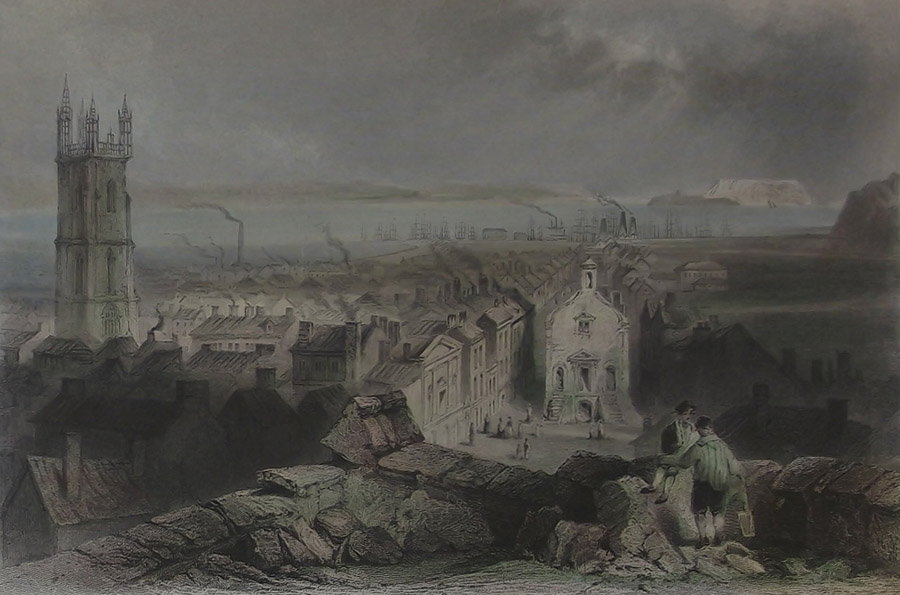
SHORT DESCRIPTION: The image depicts the town of Cardiff in Wales. Houses and buildings stretch toward the Bristol Channel with the spire of St. John the Baptist City Parish Church on the left. There is a building that is almost highlighted in the print, sitting in the middle of the street with two sets of stairs. The city has several smoke stacks and there are numerous sailing ships lining the waterfront in the distance. Beyond the waterfront is Flat Holm Island. In the foreground there are two men on a building, one sitting on a wall and one standing and holding something. NOTES: The image is from after page 124 of volume 2 of “The Ports, Harbours, Watering-Places, and Coast Scenery of Great Britain," published by George Virtue in 1842. (TMMP Library DA625 .F49 Rare) The book was first published in 1838 by Charles Tilt with descriptions by William Andrew Chatto. It was then published several times in 1839 and 1842 by George Virtue, and later after 1855 by Virtue & Co. under George’s son, James S. Virtue. The name also changed slightly, but kept the "Ports, Harbours, and Watering Places" part of the title. The books that the Virtues published kept Chatto’s descriptions for the first volume, but they expanded the book to two volumes. William Beattie wrote the text for the new second volume and an appendix added to the end of the volume 1. NOTES: From the end of the 1842 edition of Volume 2: “In taking leave of these two Volumes, illustrating the Ports, Harbours, Watering-places, and Coast Scenery of Great Britain, a few words of explanation appear necessary. The work was originally commenced by Messrs. Finden [William and Edward], and for some time carried on with all the taste and spirit characteristic of these distinguished Artists. But the remuneration accruing from the sale being found inadequate to defray the expenses incurred in its production, it was offered to the present Publisher, who readily saw the improvements of which it was susceptible and became the purchaser. Arrangements were then made for its continuation. Mr. BARTLETT, whose illustrations are so familiarly and favourably known to the Public, set out on a tour of observation along the northern coasts of England and Scotland; and, after visiting every locality indicated, returned with a portfolio of drawings taken on the spot. These were immediately placed in the hands of eminent engravers; a re-issue and continuation of the work were announced; and it is gratifying to state, that the reception which it has since met with from the Public has been most liberal. With regard to the letterpress descriptions, I beg it to be expressly understood that the labours of my pen have been confined to the Second Volume and the Appendix of Vol. 1. The First Volume was written under the signature W.A.C. - prior to my connexion with the work; and, in justice to that author, I feel it at once a duty and a pleasure to conclude the work with this statement. William Beattie, M.D.” January 1842 J. Rickerby, printer, Sherbourn Lane NOTES: St. John the Baptist City Parish Church was built in 1180 as a chapel of ease for St. Mary, which was built around 1107. St. John’s has been renovated and expanded over the years but remains a medieval structure An excerpt from “The Ports, Harbours, Watering-Places, and Picturesque Scenery of Great Britain” about the print. “The county of Glamorgan, of which the principal town is represented in the accompanying plate, abounds in historical sites well adapted for the pencil, and furnishing the reader with many interesting facts and traditions. The southern portion of the county is remarkably fertile, highly cultivated, and presents to the stranger a long succession of luxuriant corn-fields, verdant pastures, and animated pictures of rural happiness and independence. It would be difficult to find any tract of land in Great Britain that can surpass the Vale of Glamorgan in richness of soil, or in soft and graceful scenery. This favoured region extends the whole length of the county-from the base of the mountains on the north to the shore of the Bristol Channel on the south-west. It presents throughout a most gratifying proof of what may be accomplished by judicious management, when soil and climate are both in favour of agricultural operations. As fair proof of the mild and salubrious nature of the atmosphere, we need only observe that the magnolia, the myrtle, and other delicate exotics, not only live but flourish in this auspicious climate. Equally favourable to health and longevity, this district has numerous living testimonies in the vigorous health and protracted age of its inhabitants, who are fully sensible of the blessings they enjoy. The valley, at its greatest breadth, measures about eighteen miles; in various places, however, it is contracted into less than half of this space, and presents in its outline a constant variety of picturesque and graceful windings. The town of Cardiff is built on the eastern bank of the river Taff, over which there is a handsome bridge of five arches, leading to the Swansea. It is a thriving town, possessing considerable trade; and, by means of a canal from the Pennarth to Merthyr-Tydvil, has become the connecting medium between these extensive iron-works, and the English market, and is, in fact, the port of the latter. The Taff, which falls into the sea at Cardiff, forms a principal outlet for the mining districts of Glamorganshire, the produce of which hitherto found its way to the market through the Glamorganshire canal; but its sea-locked, constructed about fifty years ago, has long been found inadequate to the demands for increased accommodation, in consequence of the great prosperity of trade since the canal was opened. The Marquess of Bute, possessing lands in this neighbourhood, obtained, in 1830, an act for constructing a new harbour, to be called the Bute ship-canal, and completed the work at his own expense. The great advantages of this enterprise are- a straight, open channel from Cardiff-roads to the new sea-gates, which are forty-five feet wide, with a depth of seventeen feet at neap, and thirty feet at spring-tide. On passing the sea-gate, vessels enter a capricious basin, having an area of about an acre and a half, sufficient to accommodate large trading-vessels and steamers. Quays are erected along the side of the canal, finished with strong granite coping, exclusive of the wharfs at the outer basin. This great work was finished in the summer of 1839, at an expense to the proprietor of three hundred thousand pounds. Cardiff Castle, which stands insulated on a high mound of earth, was partially restored and modernized by the late Marquess of Bute. This ancient fortress is connected with several interesting events in history. In one of its towers, or dungeons, Robert Duke of Normandy was twenty-five years imprisoned by his younger brother, Henry the First, who had previously usurped the throne and deprived him of his eyesight. In the reign of Charles the First it was bombarded by the Parliamentary forces during three successive days, and only surrendered in consequence of treachery on the part of the garrison.”
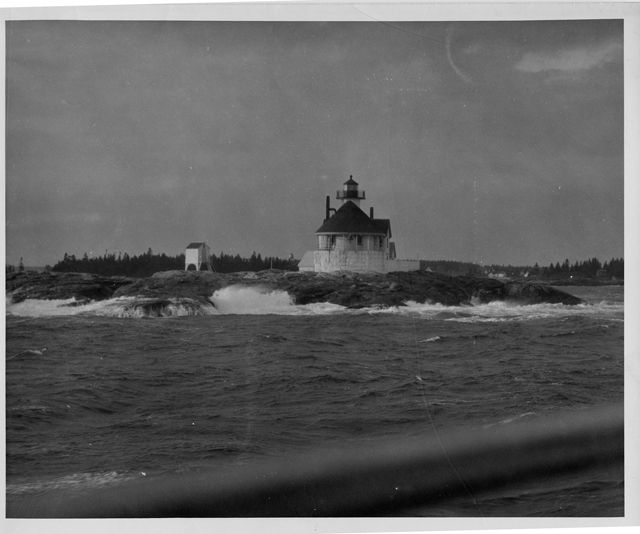
WRITTEN ON VERSO: CUCKHOLDS LIGHTHOUSE, BOOTHBAY HARBOR, MAINE. BUILT 1892, REBUILT 1907, 48 FEET HIGH
CURATOR NOTES: Lighthouse seen from passsing ship. In its Annual Report of 1891, the Lighthouse Board noted: “The Cuckolds consist of two rocky islets rising about 15 feet above high water in the westerly edge of the channel at Booth Bay. The Atlantic Coast Pilot says of them: They are dangerous of approach on their southern side on account of the reefs in that direction, and the shoals also extend half a mile to the westward of the western rock, but the eastward side of the eastern rock is quite bold-to. The flood current sets right on these rocks. They are much dreaded by mariners in thick weather and are a great peril to a large number of vessels, as it is estimated that from three to four thousand enter the bay for refuge in Booth Bay Harbor, which is well protected and is one of the most useful and important harbors of refuge on the coast of Maine. It is therefore recommended that a fog-signal be placed on the [easterly island of the] Cuckolds of sufficient range to warn vessels of their approach.” The cost for building a keeper’s dwelling, fog-signal house, and cistern, and for providing the necessary equipment was estimated to be $25,000. Congress appropriated the requested amount in March of 1891, and work on the structures began in January of 1892 at the Lighthouse Board’s shop in Portland and then continued on the actual site three months later. As the rocky islet was washed by the sea in heavy storms, the station had to be built to withstand tremendous forces. The foundation for the fog signal building was thus constructed in the form of a semicircular granite pier, 36 feet in diameter and 12 feet high, whose hollow center would protect fresh-water cisterns and a storeroom. Atop the pier was placed the brick fog signal building of the same shape but of a smaller diameter. The curved portion of the fog signal building, positioned on the islet’s highest point, faced south so that the seas could flow around the building. A substantial two-story double dwelling, built with a heavy pine frame and cross-gable dormers on the upper story, was bolted to the ledge in the lee of the fog signal building. The duplex was divided down the ridge of the main roofline into two identical apartments, each consisting of a kitchen, pantry, and sitting room on the ground floor and two bedrooms and a bathroom on the second level. A bulkhead of hard pine, sixty feet long and twelve feet high, ran along the east side of the dwelling to protect it from the fury of a nor’easter. The boathouse and boat slip were built on the northwest side of the rock, which offered the most protection from the sea. The materials, which included 105 yards of granite masonry, 60,000 bricks, 430 casks of cement, 100 tons of sand, 200 tons of broken stone and pebbles, 70,000 feet of lumber, and 3,400 pounds of wrought-iron work, was transported to the site primarily by the lighthouse tender Myrtle. The cost estimate proved to be spot-on, as the total expenditure was $24,750. The work was completed on November 16, 1892 and replaced a 57-foot-tall, wooden tripod that had marked the rocks since 1874. The fog signal, built in duplicate, was a steam-powered Daboll fog trumpet. Around 1895, a 1,000-pound bell was installed at the station to be used while the air pressure was building. In 1902 “a modern apparatus operated by oil engines” replaced the “old hot-air fog-signal apparatus.” The powerful fog signal was still insufficient to prevent all shipwrecks in the immediate vicinity, and the keepers at the Cuckolds put their lives at risk to offer assistance to those involved in a mishap. On November 20, 1896, Naval Secretary Commander George F. F. Wilde reported that “the Canadian Government has awarded to Mr. E. H. Pierce and Mr. C. E. Marr, Keepers of the Cuckholds, Me., fog-signal station, two silver watches, in recognition of their services in rescuing the Captain and crew of the Schooner Aurora of Harbourville, Nova Scotia, on 4 Jan’y, last; and that it is proposed to apply to Congress, at the next session, for permission to enable these persons to accept the testimonials offered.” The awards apparently took some time to work their way through Washington, as the two keepers did not receive the watches for over four years. At that time, Keeper Pierce was serving at Doubling Point Range and Keeper Marr was assigned to Pemaquid Point. In 1907, a small tower, consisting of a workroom and lantern room, was built atop the conical fog signal building to provide a light to better server mariners. Macbeth-Evans Glass Company of Pittsburgh provided a revolving fourth-order Fresnel lens, inside which an incandescent oil vapor lamp was originally used. A radio transmitter was added to the station in 1956. On January 27 and 28 of 1933, a nor’easter, the likes of which hadn’t been seen for forty years, struck the Cuckolds. The storm, known as the Great Gale, flooded the station with salt water that caused the batteries for the radio short circuit, thus severing all communication with the mainland. The head keeper provided the following account of the storm to the Courier-Gazette of Rockland, Maine. The northeast gale of last weekend raised havoc at this station. The bulkhead was broken down by the seas and drive into the east side of the house, breaking out all windows but one on the lower floor and also broke through the thick wall in the dining room, flooding the rooms all day with water. The keepers made temporary shutters and put on the windows toward the night when the tide was low and they could work without being washed over by the seas. For two days and nights the heavy seas pounded the house and everything in the rooms were wet with salt water before they could be removed. Clapboards and shingles were torn from the buildings, the back porch washed away, the kitchen door broken and one end of the fuel house was smashed. The Cuckolds Station was automated in 1974, and a few years later, due to problems with vandalism, the Coast Guard demolished the boathouse and keepers’ dwelling. Residents of nearby Cape Newagen watched in disbelief as the remains of the buildings were heaped up on the island and set afire. Kelly Farrin, a member of the Coast Guard who lived at the lighthouse for two years around 1970, has a website that provides a description of life at the lighthouse and pictures of the structure before the dwelling was removed. The fourth-order Fresnel lens was removed from the lighthouse in 1980 and is now on display at the Maine Lighthouse Museum in Rockland. In 2004, the Cuckolds Lighthouse was deemed excess to the Coast Guard and offered to eligible entities under the provisions of the National Historic Lighthouse Preservation Act of 2000. The Cuckolds Island Fog Signal and Light Station was formed and over the next two years developed a 542 page, two-volume application. In April of 2006, the organization, which plans to eventually rebuild the keepers’ dwelling, was awarded the deed to the lighthouse. References Annual Report of the Light House Board, various years. Maine Lighthouses: Documentation of Their Past, J. Candace Clifford and Mary Louise Clifford, 2005.
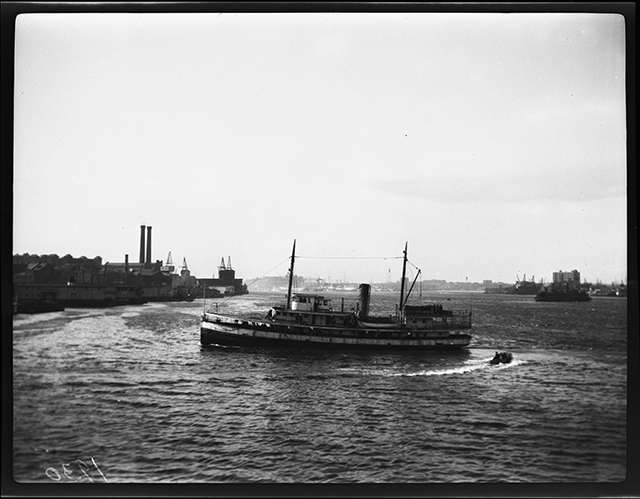 MS0091-03-01-79-008
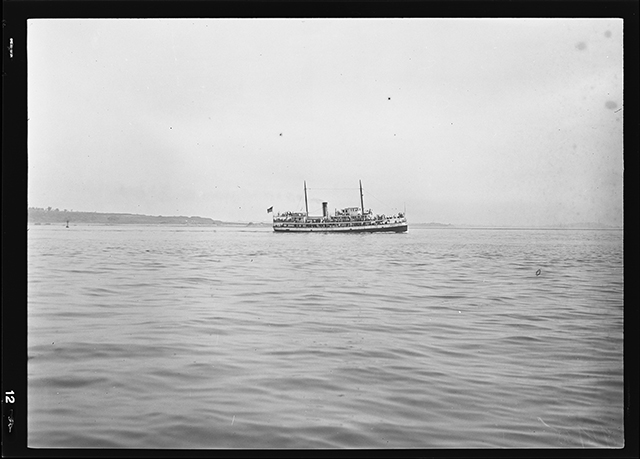 MS0091-03-01-79-009
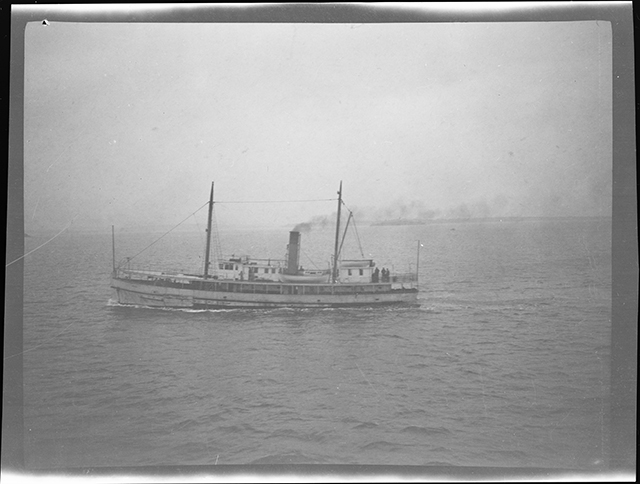 MS0091-03-01-79-012
 MS0091-03-01-79-007
 MS0091-03-01-79-011
 MS0091-03-01-37-128
 MS0091-03-01-79-006
 MS0091-03-01-79-010
 P0006-02-01-1580-02
 P0006-02-01-1580-01
 MS0094-2733 Myrtle
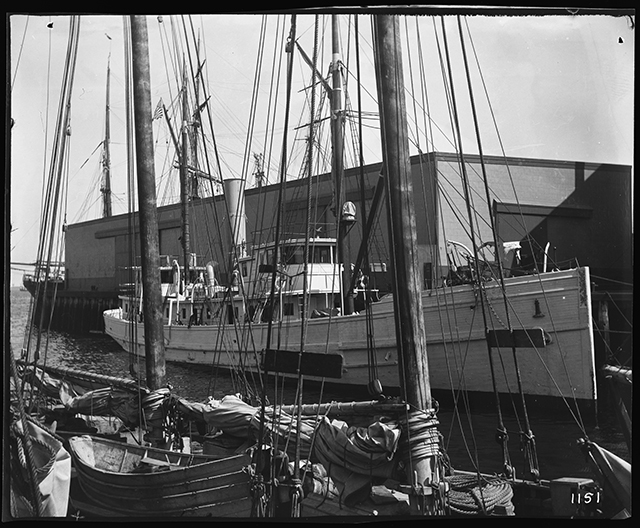 MS0094-1151 Myrtle
 P0003-01 - T-6979
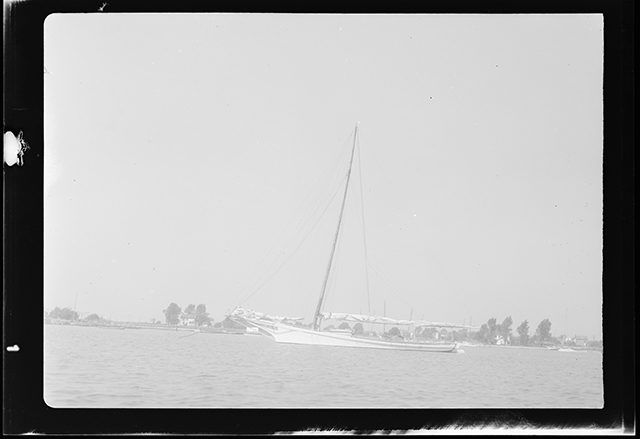 MS63-753 Skipjack Nyrth
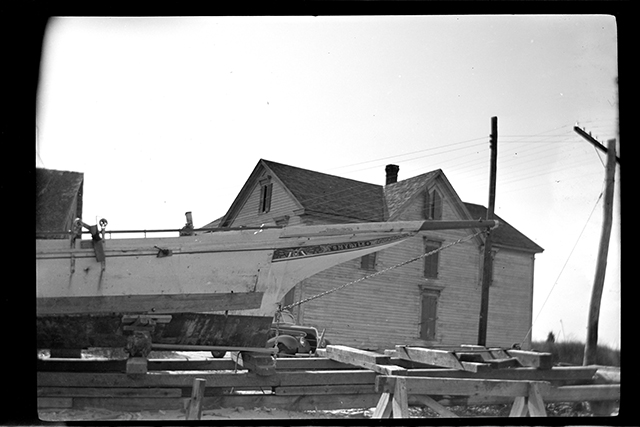 MS63-617 RH Dougherty
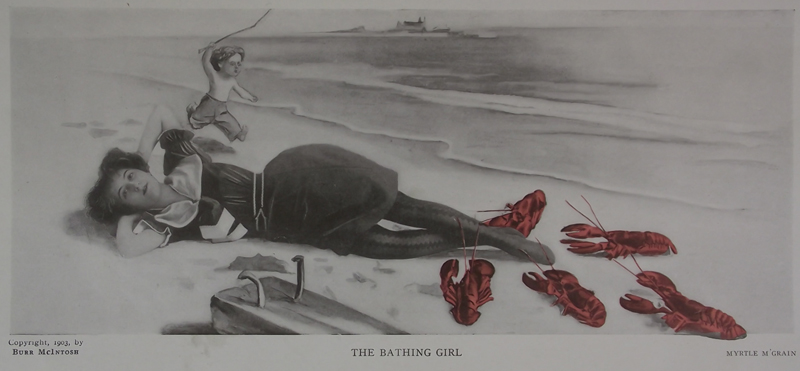 Full-size image
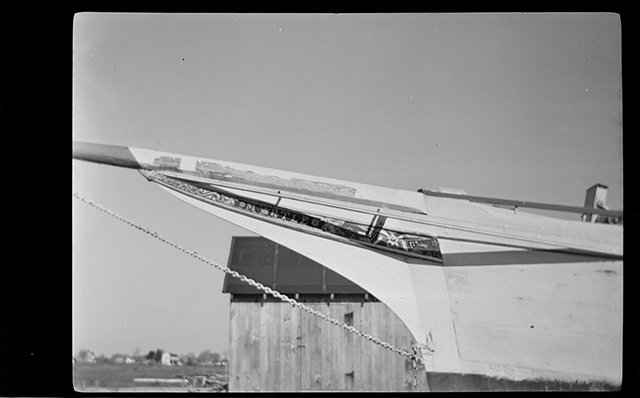 MS63-379-3 Batteaux Bows
 Full-size image
 Full-size image
 P0003-01 - L-7877
 P0003-01 - L-7876
 Full-size image
 Full-size image
 MS0091-03-01-39-029
 MS0091-03-01-39-030
 MS0091-03-01-46-036
 MS0091-03-03-097
 Full-size image
 P0003-01 - H-9975
 FC58A
 Full-size image
 le1444
 Full-size image